
Septemtivity
Turning Daycare Moments into Lifelong Sustainable Habits
A two-week design sprint with Learning Jungle and iBlum, creating a sustainability-based program that helps parents and children build habits together.
Understanding Parents and Education
The Challenge

Our team collaborated with Learning Jungle and iBlum during the Summer Academy program to promote Reggio Emilia philosophy, aiming to reduce mental overload and integrate its values into everyday family life.

The Research
Listening and Observing
Through interviews and observations at a daycare center, we discovered parents often felt exhausted due to balancing responsibilities. We discovered that sustainability and simple habits could connect families and reinforce Reggio Emilia's values, forming the basis of our approach.

interview guide for our field research

Daycare observation photo
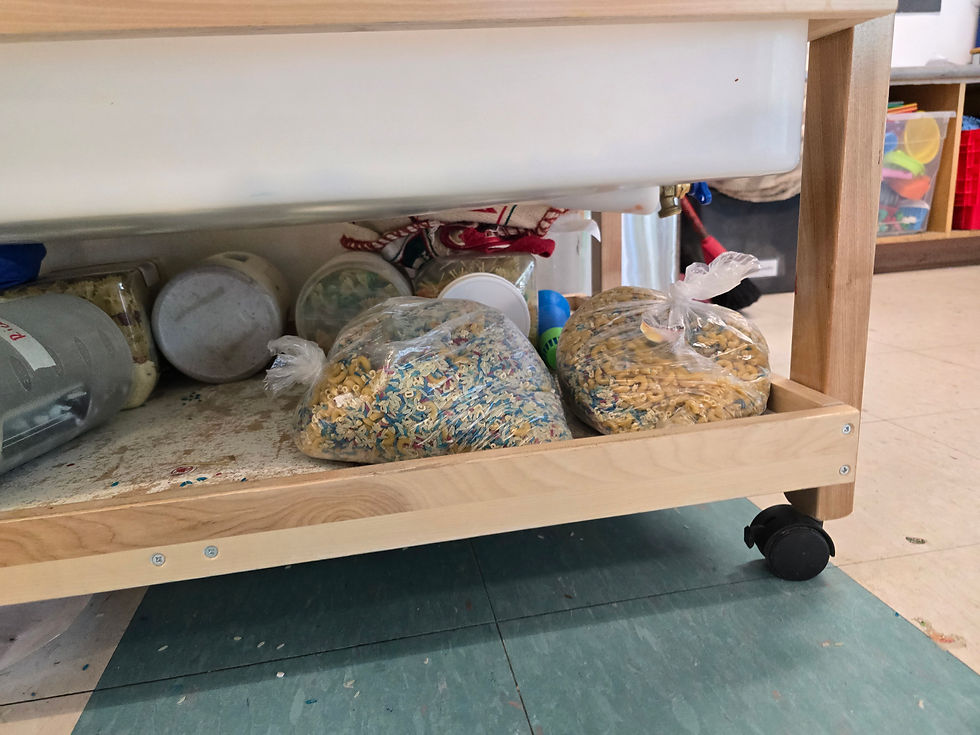
Daycare observation photo
interview guide for our field research
Personas: who we’re designing for

highlighting Sara’s needs

brainstorming person based on our research
highlighting Sara’s needs
To ground the design in real needs, we developed user personas from interviews, social listening, and behavioral insights.
One key profile, Sara, represents the Septemtivity’s audience:

Sara Connor
“I want to find the perfect daycare where my kids can feel creative and included”.
-
a community-minded parent who values sustainability but feels overwhelmed by her daily responsibilities.
-
She often doesn’t know where to start, and worries that sustainable living is expensive or time-consuming.
-
she dreams of teaching her child eco-friendly habits from an early age and finding childcare that aligns with those values.
To strengthen our insights, we also referred to industry data:
39%
working parents say that finding quality childcare disrupts their ability to manage parenting effectively.
72%
parents report stress due to school and childcare disruptions (Forbes, 2022).
2025
study
PLOS ONE found that work-family conflict damages parent-child relationships, particularly when parents experience burnout.
These findings confirmed that parents like Sara are not alone — the struggles are widespread, and solutions must address both family well-being and sustainability education.
A walkthrough of our brainstorming process. The wall of ideas shows how our team moved from research insights to creative solutions.

wall of ideas

wall of ideas of "how might we"

Refining our "How might we.."
wall of ideas
Problem Definition

Framing the Opportunity
After synthesizing our findings, we reframed the challenge into a clear design question:
How might we reduce mental overload for overwhelmed parents while promoting sustainable habits for families?
This question guided our design sprint and inspired us to create a concept that would not only ease parents’ daily lives but also leave a positive, lasting impact.

The Solution
Introducing Septemtivity
Septemtivity was our answer: a program of seven sustainability-focused daycare activities that extend into family habits. The idea was to weave sustainability into everyday routines, teaching children simple practices like sorting laundry, setting the table, or switching off lights.

Through iBlum’s app, parents could stay connected by tracking their children’s progress, viewing activity calendars, receiving updates from teachers, and even joining a supportive parent community. By linking the classroom with the home, Septemtivity helped build consistency, awareness, and joy around sustainable habits.


Figma mockups of the iBlum app with Septemtivity features

My Role – Hands-On in Every Step
As part of the design sprint, I contributed to every stage of the project. I conducted interviews with parents, observed daycare settings, and helped develop personas. I also took part in brainstorming, prototyping app features in Figma, and refining our presentation. Finally, I worked with my team to pitch our solution directly to the client.

The Outcome
A Well-Received Concept
Our client was enthusiastic about Septemtivity and saw strong alignment with their mission. They appreciated how the program balanced sustainability with parental support and considered integrating the idea into their existing communication channels.
Even within the short two-week sprint, we were able to show how design thinking and collaboration can generate real, implementable solutions that benefit both families and childcare providers.
A demo of Septemtivity’s app features, including the habit tracker and parent-teacher communication tools. This prototype illustrates how sustainability activities can seamlessly connect the daycare to the home.

Reflection
What I Learned
Septemtivity taught me the importance of looking beyond surface-level solutions. By deeply listening to parents and observing their reality, our team discovered that small, simple habits could spark meaningful change. I also learned how valuable collaboration in a sprint format is — with limited time, the energy of a team can lead to innovative and practical solutions.
 |
|---|
 |
 |
 |
 |
 |
 |

